

By Prince Offeh
Ghana Acquires Nuclear Plant Simulator to Strengthen Safety Training | Ghana has acquired a nuclear power plant simulator to train personnel and strengthen safety preparedness ahead of its planned nuclear power programme.
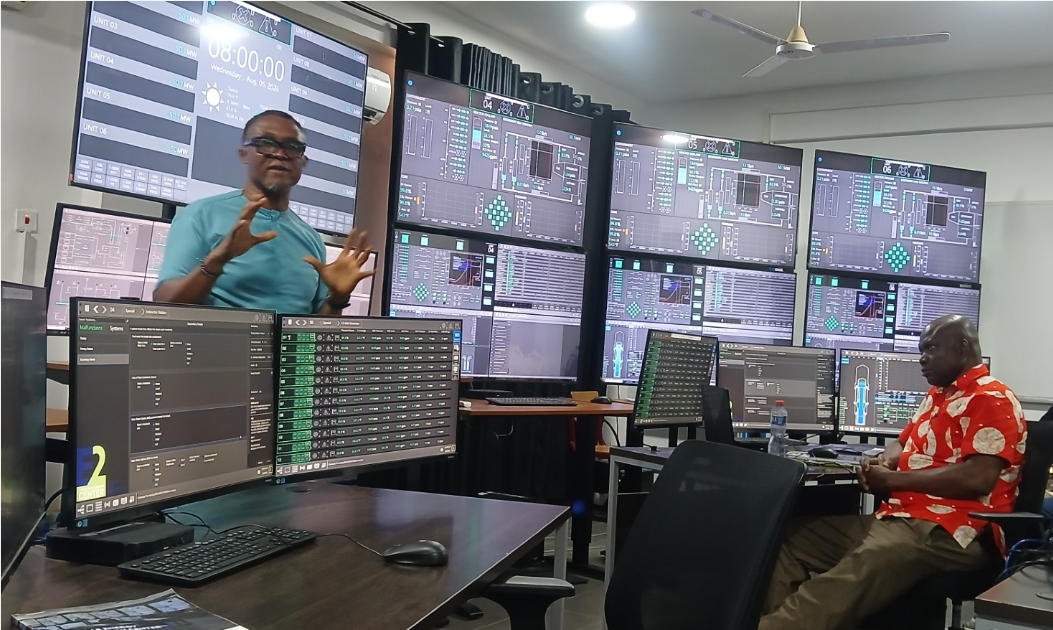
The simulation centre, located at the Ghana Atomic Energy Commission (GAEC), allows personnel to practise operating a nuclear power plant in a controlled environment. It also enables them to test safety procedures before Ghana builds an actual plant.
George Kofi Appiah, Manager of the Localisation and Stakeholder Support Centre at GAEC’s Nuclear Power Institute, said the simulator would help Ghana develop the skills needed to operate nuclear facilities safely.
He made the remarks during a study tour organised by Nuclear Power Ghana for media professionals. The programme aimed to improve public understanding of Ghana’s nuclear power plans.
According to Appiah, Ghana acquired the simulator through the Foundational Infrastructure for Responsible Use of Small Modular Reactor Technology programme, which it joined in 2020/2021.
Notably, he said the simulator is the only one of its kind in Africa and among a few globally. It has also supported training for personnel from other African countries, including Nigeria and Kenya.
The simulator is not a nuclear reactor. Instead, it is a computer-based system that reproduces the controls and operations of a nuclear power plant. This allows trainees to gain practical experience before working at a real facility.
Simulator based on small modular reactor
The simulator uses the NuScale small modular reactor (SMR) design. The technology uses smaller reactor units that can operate together to generate electricity.
Appiah said the design has been upgraded from its original 50-megawatt capacity to 77 megawatts per module. A 12-module plant could therefore produce up to 924 megawatts.
Furthermore, individual modules can undergo maintenance without shutting down the entire plant. This could improve operational flexibility.
The design also includes several safety features. These include protective structures and passive safety systems that use natural forces such as gravity to respond during emergencies.
Control rods can also slow or stop the nuclear reaction. During a power failure, gravity can cause the rods to fall into the reactor automatically.
Building Ghana’s nuclear workforce
Ghana’s nuclear programme will require nuclear engineers, reactor operators, chemists and other technical specialists.
Ghana Acquires Nuclear Plant Simulator to Strengthen Safety Training | AviationGhana