

By Prince Offeh
Ghana Tightens Enforcement Against Foreign-Owned Informal Retail Businesses | The Ghana Investment Promotion Authority (GIPA) and the Ghana Union of Traders Association (GUTA) have agreed on measures to protect Ghanaian-owned informal retail businesses.
The measures include stronger monitoring, enforcement and public education. They also include a reporting system for suspected breaches of laws that reserve certain retail activities for Ghanaian citizens.
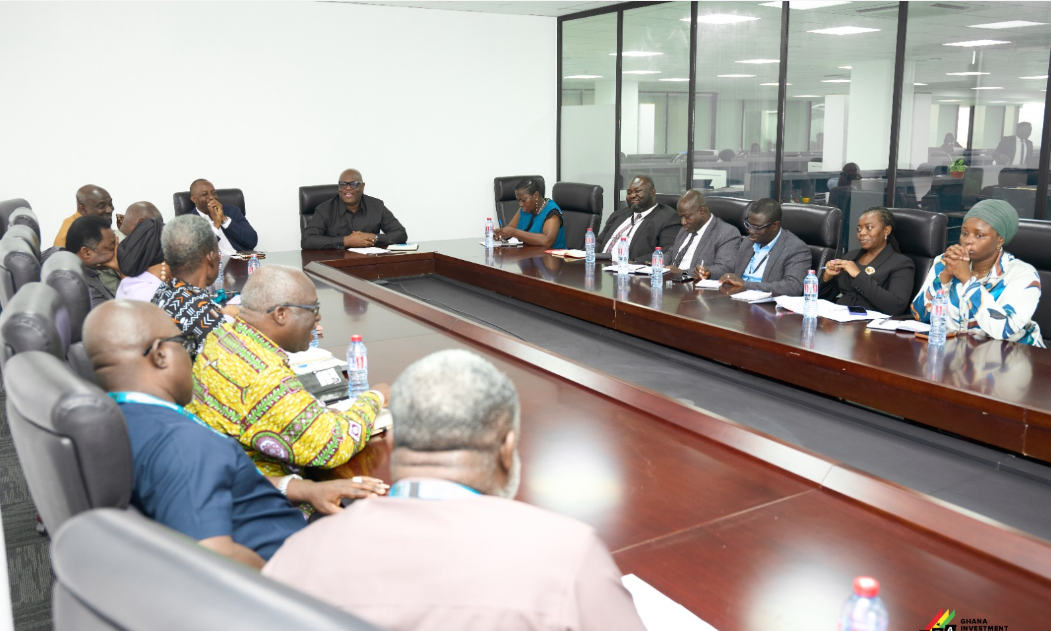
The agreement followed a meeting convened under the directive of the Ministry of Trade, Agribusiness and Industry (MoTAI). GIPA Chief Executive Officer, Mr Simon Madjie, led the meeting with support from Deputy Chief Executive Officer, Mr Abdul Razak Baba.
GUTA executives, MoTAI’s Internal Trade Unit and senior GIPA officials also attended. A key concern was the practice of Ghanaians acting as fronts for foreign nationals. This arrangement can conceal foreign ownership or control of businesses operating in sectors reserved for citizens.
Mr Madjie reaffirmed that informal retail activities, including open markets, small shops and kiosks, are reserved exclusively for Ghanaians under the GIPA Act, 2026 (Act 1117).
He stressed that Ghana remains open to foreign investment in the formal retail sector, including malls and supermarkets. However, foreign investors must comply with Ghana’s investment laws.
GUTA CEO, Mr Clement Boateng, also backed lawful foreign investment. He said the Association had no objection to foreigners who comply with the law. However, he called for action against businesses that fail to meet the legal requirements.
Under the GIPA Act, 2026, non-citizens or non-wholly Ghanaian-owned enterprises engaging in reserved activities face administrative penalties of between 5,000 and 10,000 penalty units.
At GH¢12 per penalty unit, the initial penalty ranges from GH¢60,000 to GH¢120,000. Continuing breaches can attract additional monthly penalties of up to GH¢12,000. The Act also makes it an offence to let or sublet a market stall or store to a foreigner for trading purposes.
To strengthen enforcement, GIPA and GUTA agreed to revive an inter-agency task force involving MoTAI, local authorities, security agencies and other regulators. Additionally, the institutions will establish a dedicated monitoring unit and reporting mechanism. They will also launch a public education campaign on informal retail regulations and reporting channels.
Diplomatic engagement with foreign missions will further clarify Ghana’s legal requirements and promote compliance.
Ghana Tightens Enforcement Against Foreign-Owned Informal Retail Businesses | AviationGhana