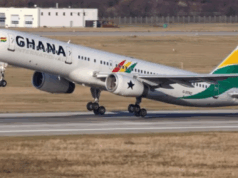









Aviation in 2026: Growth on the Horizon, Costs, Fees, and Infrastructure at a Crossroads | By Dominick Andoh
Africa’s aviation industry is poised for continued growth in 2026, reinforcing its role as one of the fastest-expanding regions globally, but persistent cost barriers, regulatory shifts, and infrastructure challenges risk dampening the full potential of this expansion.
The International Air Transport Association (IATA) forecasts global passenger traffic to grow by 4.9% in 2026, reaching 5.2 billion travelers worldwide.
Africa’s passenger demand is expected to expand faster, with traffic rising to 149 million passengers in 2026 from 142 million a year earlier, representing about 6% growth. This positions Africa, including West Africa, as one of the fastest-growing aviation regions globally, albeit from a low base. 11 19
Despite the growth trajectory, profitability remains thin. African airlines are forecast to generate net profits of just USD$ 200 million in 2026, translating to a net margin of 1.3% and roughly US$ 1.3 per passenger. By comparison, the global industry is expected to post US$ 41 billion in net profit, with a 3.9% margin and USD 7.9 per passenger. North American and Middle Eastern carriers are projected to earn more than US$ 9 and US$ 28 per passenger, respectively, underscoring the widening profitability gap.
Cost pressures are a central drag. Airlines operating in Africa face fuel costs about 17% higher than the global average, alongside elevated taxes, fees, air navigation charges, and financing costs.
Blocked airline funds remain a significant issue, with IATA estimating that US$954 million in funds are trapped across 23 African countries as of October 2025, accounting for 79% of the global total. This dynamic directly feeds into higher ticket prices and constrains route expansion, particularly in price-sensitive West African markets.
Operational challenges further weigh on the outlook. Aircraft operating in Africa are, on average, five years older than the global fleet, increasing fuel burn and maintenance requirements amid persistent supply-chain delays for new aircraft and spare parts. These constraints limit utilization and reduce schedule reliability.
Yet the long-term fundamentals remain compelling. Africa currently accounts for just 2–3% of global air traffic, despite strong demographic and economic growth. Passenger volumes are projected to more than double to over 410 million by 2044. Visa liberalisation is improving, with 28% of intra-African routes now visa-free and 44% of countries offering e-visas, supporting future connectivity gains.
For 2026, Africa’s aviation story, including West Africa, will be defined by a tension between strong demand growth and unresolved structural barriers. Unlocking the sector’s full potential will depend on government action to reduce blocked funds, lower costs, improve infrastructure, and treat aviation as a strategic economic enabler rather than a revenue source.
Ghana’s Aviation Market Outlook
As Ghana prepares for a pivotal moment in its aviation sector, recent government decisions reveal both the potential for growth and the obstacles that lie ahead for West African air travel.
In the 2026 national budget, the Ghanaian government has raised the domestic Airport Passenger Charge from GHC 5 to GHC 100. This significant increase responds to industry demands for an overhaul of Ghana’s aviation revenue model, which previously struggled to maintain operational sustainability at regional airports due to the low passenger charge. The Kotoka International Airport, a profitable hub, has had to cross-subsidize other facilities, revealing systemic issues in the funding of airport operations.
Additionally, the introduction of the Airport Infrastructure Development Charge (AIDC) has stirred debate. This new fee will impose costs of US$50 on international passengers, US$15 for travel within the Economic Community of West African States (ECOWAS), and US$20 for routes connecting to other African countries.
The intention behind these charges is to finance critical airport and general aviation infrastructure improvements to the tune of US$800 million, yet they raise immediate concerns about fare increases. This discussion is complicated by a prior commitment made by ECOWAS member states, which vowed to abolish air transport taxes and reduce passenger and security charges by 25% beginning January 1, 2026. Such measures were aimed at lowering airfares and enhancing regional connectivity.
As Ghana moves forward with these changes, the aviation sector stands at a crossroads. While the elevated charges could help facilitate much-needed infrastructure development, they also risk increasing the cost of travel in the short term, potentially counteracting the broader objectives of making air travel more accessible.
The outcome of these policy decisions will determine whether Ghana can effectively leverage its aviation market to improve connectivity and support economic growth across the region.
Additionally, the runway extension at Prempeh I International Airport, also known as Kumasi Airport, is expected to be completed this year. The extension will increase the runway length from just over 1,900 meters to more than 2,300 meters. This upgrade will create new opportunities for Kumasi, making it attractive for international airlines to offer direct flights. It will also provide the country with an alternative airport option to Kotoka International Airport, located just an hour away. The completion of a new air traffic control tower at Kotoka International Airport is also expected to enhance safety at the facility.
Aviation in 2026: Growth on the Horizon, Costs, Fees, and Infrastructure at a Crossroads | Editorial enquiries to AviationGhana.info@gmail.com | Marketing & Adverts Enquiries WhatsApp: +233 24 3376878 | AviationGhana