

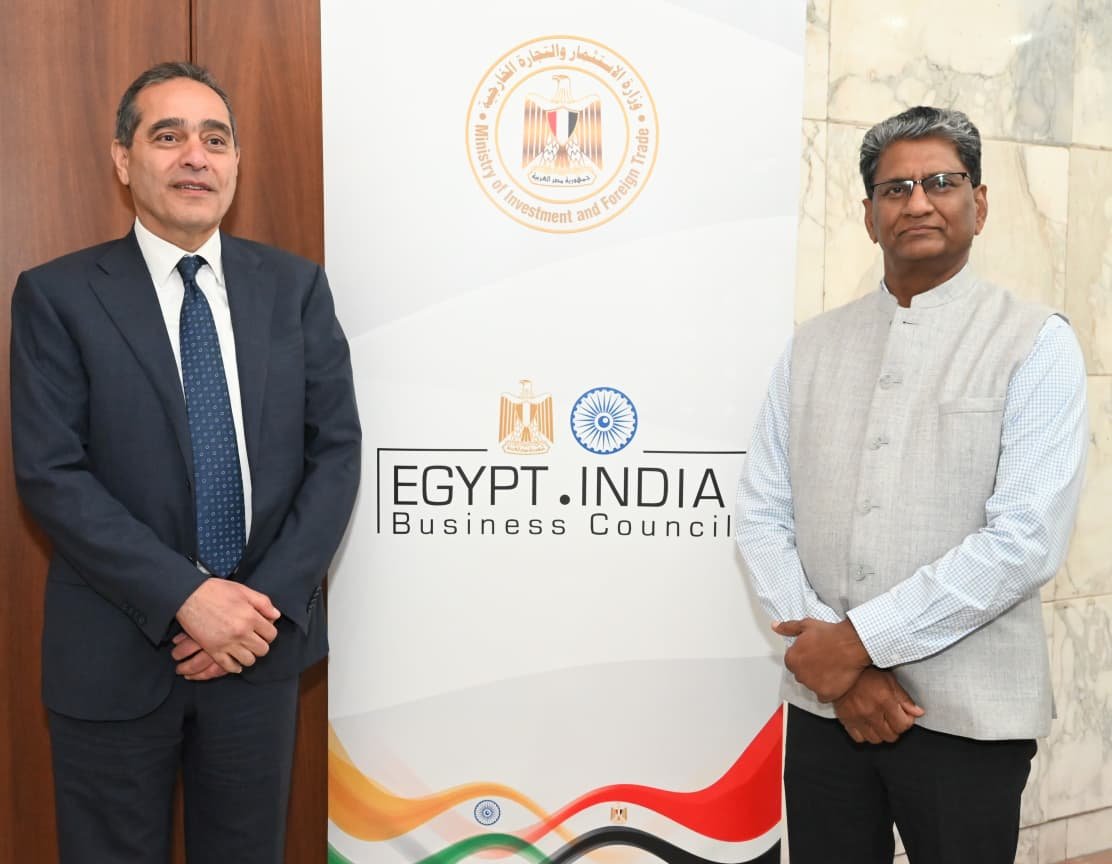
Egypt Targets High-Quality Indian Investment to Expand Industry, Exports and Regional Trade
Egypt is seeking to attract more long-term and high-quality investment from India into its industrial sector as the North African country steps up efforts to expand manufacturing, increase exports, create jobs and strengthen its position as a regional production hub.
Egypt’s Minister of Investment and Foreign Trade, Mohamed Farid Saleh, disclosed the plans during a meeting with representatives of Indian businesses while in India to attend the 16th BRICS Trade Ministers’ Meeting in Jaipur.
The discussions focused on strengthening economic and industrial cooperation between Egypt and India, with particular attention to manufacturing, technology transfer, joint production and the expansion of Egyptian-made products into domestic and international markets.
According to a report carried by the Ghana News Agency (GNA), the Egyptian government is not only interested in attracting capital from Indian companies but also wants investments that can contribute to the development of sophisticated manufacturing capabilities and the introduction of new technologies.
The strategy reflects Egypt’s broader ambition to deepen its industrial base and use foreign investment as a tool to increase production capacity and expand its export potential.
Indian investment already creating jobs in Egypt
Egypt pointed to the presence of one of India’s largest investors in the country as an example of the potential benefits of deeper economic cooperation.
The Indian investor has committed approximately US$1.5 billion to projects in the Port Said area, where its industrial facilities manufacture products including caustic soda, polyvinyl chloride (PVC), calcium chloride and bio ethylene.
The investments have reportedly generated about 900 direct jobs and 1,500 indirect jobs, demonstrating the potential impact of large-scale industrial investment on employment and local economic activity.
Egypt is now looking to build on such investments by encouraging additional projects that can expand production, introduce new technologies and improve the country’s ability to manufacture more sophisticated products.
The government believes that deeper cooperation with Indian businesses can support the development of industries that serve both Egypt’s domestic market and overseas markets.
Expansion plans include US$150 million ethylene terminal. Further expansion of industrial production was also discussed during the meeting.
Among the projects under consideration is the construction of a terminal for ethylene imports at an estimated cost of US$150 million.
The proposed terminal is expected to provide a more stable supply of raw materials required for PVC production while helping to reduce production costs.
For Egypt’s manufacturing sector, a reliable supply of industrial inputs is critical to maintaining production and improving the competitiveness of locally manufactured goods.
The project could therefore support the expansion of Egypt’s chemical and plastics industries while strengthening the country’s industrial supply chain.
The emphasis on securing raw materials also highlights Egypt’s efforts to develop industrial ecosystems rather than relying solely on individual manufacturing projects.
Automotive industry emerges as another area of cooperation
Automotive manufacturing was another important area discussed during the engagement between Egyptian authorities and Indian businesses.
The Egyptian side held discussions with representatives of India’s automotive industry on the progress of negotiations with the Arab Organisation for Industrialisation regarding the potential establishment of commercial lorry production in Egypt.
The proposed project is expected to contribute to the development of Egypt’s local automotive industry and increase the country’s capacity to manufacture commercial vehicles.
If implemented, trucks produced in Egypt could serve domestic demand while also being supplied to regional markets.
The development of a commercial vehicle manufacturing industry could have wider implications for Egypt’s transport and logistics sectors, particularly as the country seeks to strengthen its position as a gateway between Africa, the Middle East, Europe and Asia.
For regional trade, locally produced commercial vehicles could also support the movement of goods and strengthen supply chains across neighbouring markets.
Egypt seeks investment with long-term economic impact
The Egyptian government’s approach suggests a growing focus on attracting investment that goes beyond financial capital.
Authorities are seeking projects capable of transferring technology, improving local manufacturing expertise, creating employment and producing goods that can compete in international markets.
This approach is particularly significant as countries across Africa compete to attract foreign direct investment into manufacturing and other productive sectors.
For Egypt, its large domestic market, strategic geographical location and connections to regional and international markets provide opportunities for investors seeking to establish production bases.
The country’s engagement with Indian companies also reflects the growing economic relationship between the two countries.
India has a large and diversified industrial sector, with expertise spanning chemicals, pharmaceuticals, automotive manufacturing, technology and other areas. Egypt’s interest in attracting Indian businesses therefore presents opportunities for cooperation across several industries.
The proposed expansion of manufacturing activities could also help Egypt reduce dependence on imported finished products while increasing the volume and value of goods it exports.
Potential significance for African trade
The developments could have implications beyond Egypt’s borders.
As Egypt expands its manufacturing capacity, locally produced goods could increasingly target markets across Africa and other regions. The potential production of commercial lorries, for instance, could support the supply of vehicles to regional markets and contribute to the growth of transport-related industries.
For businesses operating across Africa, greater industrial production in Egypt could create new opportunities for trade, logistics, investment and supply-chain partnerships.
The country’s ambition to become a stronger manufacturing and export centre also comes at a time when African economies are seeking to increase intra-African trade and develop local production capacity.
Egypt’s efforts to attract Indian investment could therefore form part of a wider strategy to connect international capital and technology with African industrial development.
Looking ahead
The Egyptian government is expected to continue engaging Indian businesses as it seeks to turn investment discussions into concrete industrial projects.
The focus on joint production, technology, manufacturing and exports indicates that Egypt wants foreign investment to play a direct role in transforming its productive economy.
The reported US$1.5 billion investment in Port Said, the proposed US$150 million ethylene import terminal and discussions on commercial lorry production demonstrate the scale and diversity of opportunities being considered.
For Egypt, the objective is clear: attract investment that creates jobs, strengthens domestic industries, improves production and enables Egyptian-made goods to reach more markets.
As discussions with Indian businesses continue, the success of these initiatives will depend on how effectively proposed investments are translated into operational projects and how much value they generate for Egypt’s economy and its growing role in regional trade.
Source: Ghana News Agency (GNA)