






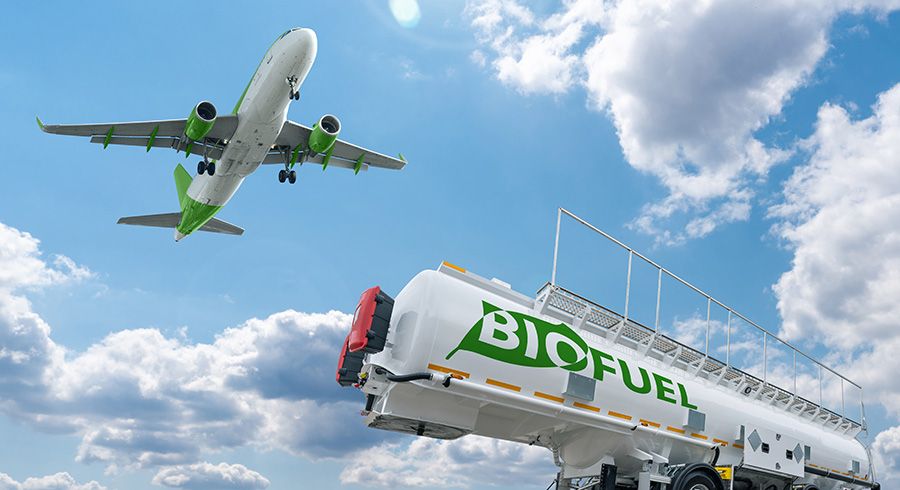
Sufficient SAF Feedstock for Net Zero by 2050 – Study | The International Air Transport Association (IATA), in partnership with Worley Consulting, has released a new study confirming that enough sustainable aviation fuel (SAF) feedstock exists to enable airlines to achieve net zero carbon emissions by 2050.
The study stressed that all identified feedstocks meet strict sustainability criteria, with no resulting changes in land use. However, it also warned of significant barriers that could delay large-scale SAF deployment unless governments, policymakers, and energy producers act urgently.
Among the main challenges are the slow pace of new technology rollout and competition with other industries for the same biomass feedstocks. At present, the only SAF production technology operating at commercial scale is Hydroprocessed Esters and Fatty Acids (HEFA), which uses inputs such as used cooking oil.
According to IATA’s Net Zero Roadmaps, airlines will require 500 million tonnes of SAF annually by 2050. This can be achieved from two key sources from biomass and Power-to-liquid.
IATA’s Director General, Willie Walsh, said the study provides clear evidence that feedstock supply is not the problem. “There is enough potential feedstock from sustainable sources to reach net zero carbon emissions in 2050. However, this will only be accomplished with a major acceleration of the SAF industry’s growth. We need shovels in the ground now,” he said.
Key findings from the study highlighted that with the right policies and investments, over 300 Mt of SAF from biomass and about 200 Mt from e-SAF could be produced annually by 2050. The report also identified North America, Brazil, Europe, India, China, and ASEAN as regions critical to driving SAF output.
Marie Owens Thomsen, IATA’s Senior Vice President Sustainability and Chief Economist, said the transition presents a wider economic opportunity. “The report highlights the local and regional opportunities for SAF production to create jobs, stimulate economies and support energy security goals. Governments, energy producers, investors, and the aviation sector must work together, de-risk investment, and accelerate rollout,” she said.
The report concludes with a call for coordinated global policies, cross-sector collaboration, and urgent investment to turn proven SAF feedstock potential into large-scale production within the next 25 years.
Sufficient SAF Feedstock for Net Zero by 2050 – Study | Send all enquiries and press releases to AviationGhana.info@gmail.com