

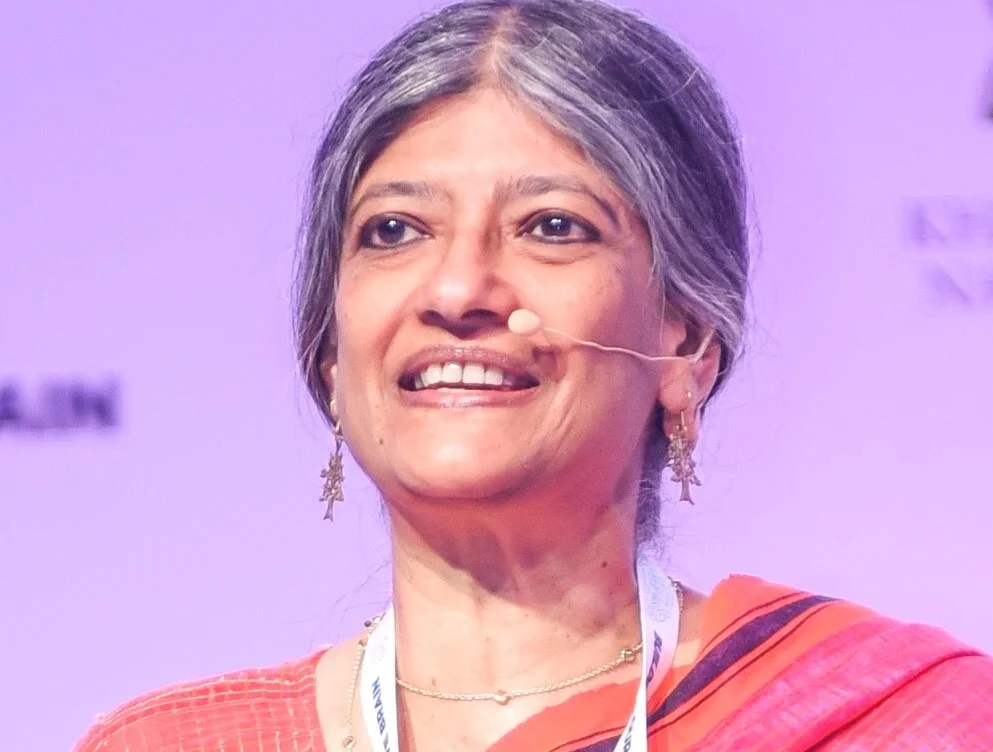
What the ILO Can Teach a Divided World | By Jayati Ghosh
Multilateralism gets a bad rap nowadays for being weak and incapable of addressing the major challenges of our time. But this view conveniently ignores the extent to which multilateral institutions, and therefore international cooperation, continue to underpin almost every aspect of our daily lives, wherever in the world we may live.
Air travel, the internet, access to goods and services of all kinds, and even the very survival of many species of flora and fauna all depend on international regulation and monitoring. This is seldom recognized, but none of it would be possible without some degree of global cooperation on rules and enforcement.
One such institution is the International Labour Organization (ILO). Despite being hugely underestimated and actively undermined, it remains an impressive example of what multilateralism can achieve through good-faith dialogue and compromise.
The ILO predates the United Nations, having been established in 1919 under the now-defunct League of Nations and brought under the UN umbrella in 1946. Formally, it is the UN agency that is concerned with advancing social justice through the promotion of decent work. But since the conditions and consequences of work are inextricably linked to social, economic, cultural, technological, and legal forces, this necessarily means dealing with much more than employment.
The ILO’s 1944 Philadelphia Declaration, which broadened its aims and purposes, remains inspiring, even visionary: It stated labor is not a commodity and that freedom of expression and association are essential to any real human progress. Recognizing that poverty anywhere is a danger to prosperity everywhere, the Declaration called for an unrelenting war on want.
The Declaration emphasized the importance of what we now call “policy coherence,” with “all national and international policies and measures, in particular those of an economic and financial character,” to be judged and accepted “only in so far as they may be held to promote and not to hinder” the attainment of its central aim. That aim was to ensure conditions in which “all human beings, irrespective of race, creed or sex, have the right to pursue both their material well-being and their spiritual development in conditions of freedom and dignity, of economic security and equal opportunity.”
In today’s world, it is much harder to put these ideals into practice. For decades, economic policymakers worldwide have relied on the perceived benefits of profit-oriented investment in liberalized markets. Social justice and improved living standards were treated as trickle-down byproducts of economic growth.
Instead, economic inequality and material insecurity have soared, and social division and extreme polarization have deepened both within and between countries, fueling distrust and making collective action increasingly difficult. It is not just multilateralism that is being jeopardized. Even once-stable democracies are under threat.
Recovering the ability to cooperate and coordinate internationally requires a reinvigorated social contract, and the ILO—which is preparing to pick a new director-general—is well placed to lead the charge. It has already expanded its mandate well beyond formal employment to recognize and address the conditions of informal workers, who now account for a majority of workers globally, as well as unpaid workers. But much more needs to be done.
How is such a social contract to be developed and implemented? One answer lies in the way the ILO is organized: a tripartite system in which workers, employers, and governments are all represented. The ILO’s ability to reach agreements and compromises among parties with potentially conflicting interests, and to do so regularly over decades, is truly remarkable. Its worker base must be expanded beyond formal employment to include informal and unpaid workers, just as the employer base must encompass smaller enterprises and not just large corporations. But the principle of ongoing dialogue among competing interests must not be lost.
Nowhere is the importance of this principle more evident than at the ILO’s annual labor conferences. Even in years when they do not seem to have accomplished very much, the ability to bring disparate people and organizations together to hash out complex and potentially inflammatory issues is exceptional in a world where too many powerful people and interests hold compromise in contempt.
As the ILO chooses its leader for the next five years, it is vital for people and organizations around the world to recognize it for what it is: a global public good whose achievements demonstrate the necessity and the potential of international cooperation.
Jayati Ghosh, Professor of Economics at the University of Massachusetts Amherst, is a member of the Club of Rome’s Transformational Economics Commission and Co-Chair of the Independent Commission for the Reform of International Corporate Taxation.
Copyright: Project Syndicate, 2026.
www.project-syndicate.org