
Democracy vs. Data Centres | Angela Huyue Zhang
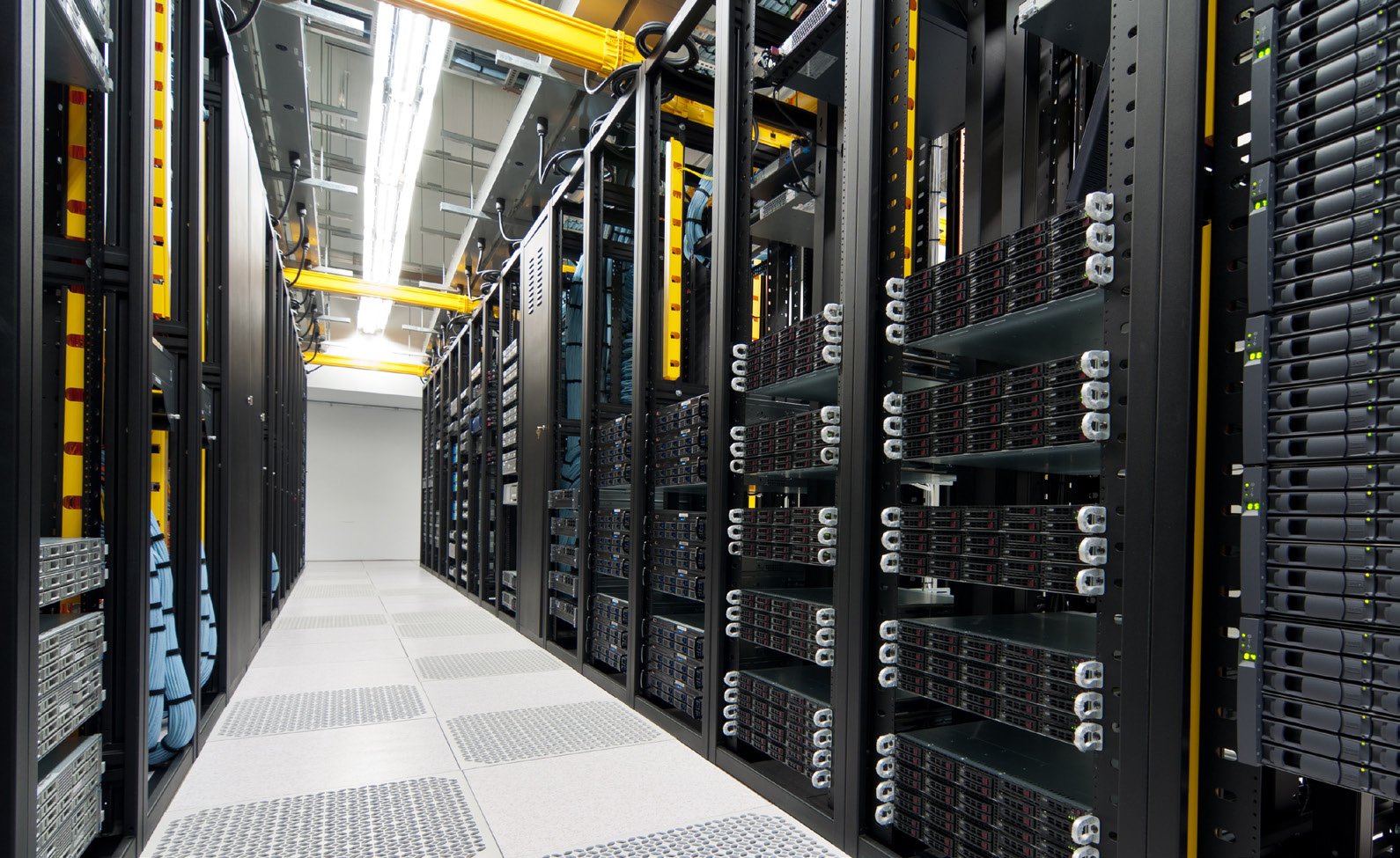
LOS ANGELES—Hardly a week goes by without news of another American town or city pushing back against a proposed AI data centre in its backyard. Residents worry about the rising electricity costs, excessive water consumption, noise pollution, and other burdens their communities will have to shoulder to sustain these power-guzzling behemoths.
With AI’s insatiable demand for computing power fueling a nationwide data-centre building spree, the backlash is rapidly gaining momentum. A recent Gallup survey finds that seven in ten Americans oppose building AI data centres in their local communities. Hundreds of related bills have been introduced in state legislatures this year, and lawmakers in at least 11 states have proposed moratoria on new construction while they study projects’ potential impact.
Meanwhile, tech executives warn that if data-centre construction in the United States is slowed by local opposition and regulation, China—aided by lower energy costs and a more permissive regulatory environment—will win the race for AI supremacy. But although Chinese developers face little institutional resistance to such projects, it is far from obvious that China’s aggressive expansion has given the country a decisive edge.
If anything, China’s experience should serve as a cautionary tale for countries rushing to expand AI infrastructure. China’s data-centre boom shifted into high gear in 2022, after the country’s state planner launched the ambitious Eastern Data, Western Computing project. The logic behind this initiative seems straightforward: shift computing resources from China’s densely populated eastern provinces, where demand is concentrated, to western regions in which land and energy are abundant and less expensive. China has also promoted “green” computing by relying heavily on renewable energy to power many of these facilities.
But while the logic of central planning may be compelling, implementation has run into a series of practical constraints. “Many of the most valuable AI applications—including real-time inference, financial services, and chatbots—require low-latency computing, which limits their ability to shift workloads to remote data centres..
Western China has vast renewable-energy resources, but wind and solar power are inherently intermittent, storage remains costly, and long-distance transmission poses significant challenges. Yet local governments, eager to capture a share of the AI boom, have continued to offer generous subsidies for new projects, often without fully accounting for these bottlenecks.
The result has been a growing mismatch between supply and demand, with many facilities operating well below capacity. Some Western data centres operate at only 20–30% capacity, while computing demand remains concentrated in coastal provinces. In China, abundant energy and rapid data-centre expansion have not significantly reduced AI firms’ electricity costs.
Given the short life cycle of AI chips, unused infrastructure can become outdated surprisingly quickly. Even underutilised facilities are expensive to maintain, and local governments must also contend with the growing volumes of electronic waste generated by ageing equipment. In response to mounting overcapacity, China reportedly cancelled more than 100 data-centre projects between the start of 2024 and mid-2025.
Given the inefficiencies and distortions produced by this top-down approach, China’s experience offers several valuable lessons for Western policymakers and tech leaders.
First, delays caused by local opposition can impose greater discipline, forcing developers to answer basic questions they might otherwise avoid: Who will use this facility? Will there be sufficient demand over the long term? What happens if the project fails to generate enough revenue to justify the investment? Such scrutiny can help prevent the formation of an AI infrastructure bubble.
Second, local opposition gives ordinary citizens a voice. So far, Americans have had little influence over AI development. Opposing data-centre projects remains one of their few ways to challenge the companies driving the AI revolution.
Last but not least, slower AI deployment may act as a buffer against social disruption. Leading AI firms are pushing for ever-greater computing power because lower costs accelerate adoption. But faster adoption can also accelerate job displacement and widen inequality before institutions, policymakers, and workers have time to adapt. The US, already grappling with widening economic inequality, growing social fragmentation, and deepening political polarisation, will need time to absorb a technological shock of this magnitude.
To be sure, the pendulum could swing too far, leaving the US without the computing capacity it needs to remain competitive. But in a democratic society, the ability to oppose policies and projects that affect one’s community empowers ordinary citizens. In doing so, it reduces the risk of wasteful investment, limits environmental harms, and curbs speculative excess.
The speed of AI adoption should not be the sole measure of a country’s strength. Americans should be able to decide, openly and collectively, what is worth building, where it should be built, and at what cost.
Angela Huyue Zhang, Professor of Law at the University of Southern California, is the author of High Wire: How China Regulates Big Tech and Governs Its Economy (Oxford University Press, 2024) and Chinese Antitrust Exceptionalism: How the Rise of China Challenges Global Regulation (Oxford University Press, 2021).
Democracy vs. Data Centres | www.project-syndicate.org | Aviationghana