

African Businesses Turn to Stablecoins to Beat Currency Volatility and Forex Shortages | African businesses are increasingly adopting stablecoins to protect themselves from currency volatility and persistent foreign exchange shortages, industry leaders have said.
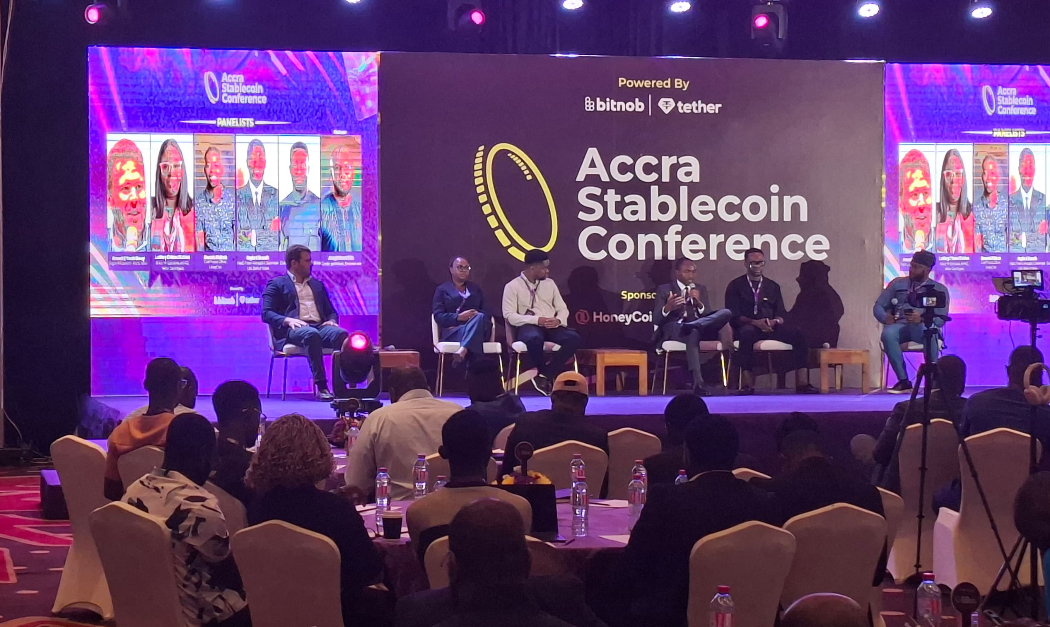
According to industry executives, dollar-backed digital assets now help businesses preserve value, access dollar liquidity and complete cross-border transactions faster and at lower costs. They shared these insights during a panel discussion on “The Future of Cross-Border Payments in Africa: Stablecoins at the Core” at the Africa Stablecoin Consortium programme in Accra.
Speaking at the event, Lasbery Chioma Oludimu, Group Vice President, Operations and Managing Director of Yellow Card Nigeria, said unstable local currencies and limited access to foreign exchange continue to disrupt business operations across the continent.
To illustrate the challenge, she cited a Nigerian company that secured a euro-denominated loan. However, the sharp depreciation of the naira significantly increased the local currency cost of servicing the debt. As a result, the company struggled to meet its repayment obligations despite making payments for several years.
“Businesses are suffering because of currency volatility in Africa, as well as foreign exchange shortages, and stablecoin has come to solve some of these challenges,” she said.
In addition, panel members noted that many businesses struggle to obtain foreign exchange through official channels. Consequently, they often pay higher costs to settle international obligations.
They explained that stablecoins offer a practical alternative by enabling quicker, cheaper and more efficient cross-border transfers. Furthermore, the digital assets provide businesses with access to dollar liquidity in markets where foreign exchange remains scarce.
Arnoud d’Yve de Bavay, Africa Lead Expansion at Tether, said the growing adoption of stablecoins reflects their ability to solve real-world financial challenges.
He explained that although stablecoins initially gained popularity through cryptocurrency trading, businesses and individuals now use them for payments, savings and remittances. He also stressed that stablecoins should complement, rather than replace, traditional financial institutions by improving payment systems and expanding financial inclusion.
Similarly, Dominic Mulinda, Chief Product Officer of HoneyCoin, said successful cross-border payments require strong liquidity, reliable banking partnerships and regulatory compliance. He added that stablecoins can simplify international transactions when supported by the right financial infrastructure.
Meanwhile, Hayford Kumah, Head of the Fintech Oversight and Supervision Unit at the Bank of Ghana, said digital assets and stablecoins will likely shape the future of payments and financial services.
He noted that regulators remain focused on encouraging innovation while safeguarding financial stability and protecting consumers.
Stablecoins are digital assets whose value is typically pegged to reserve assets such as the US dollar. Unlike cryptocurrencies such as Bitcoin and Ethereum, they maintain relatively stable prices, making them increasingly suitable for payments, remittances, savings and cross-border transactions.
African Businesses Turn to Stablecoins to Beat Currency Volatility and Forex Shortages | AviationGhana