

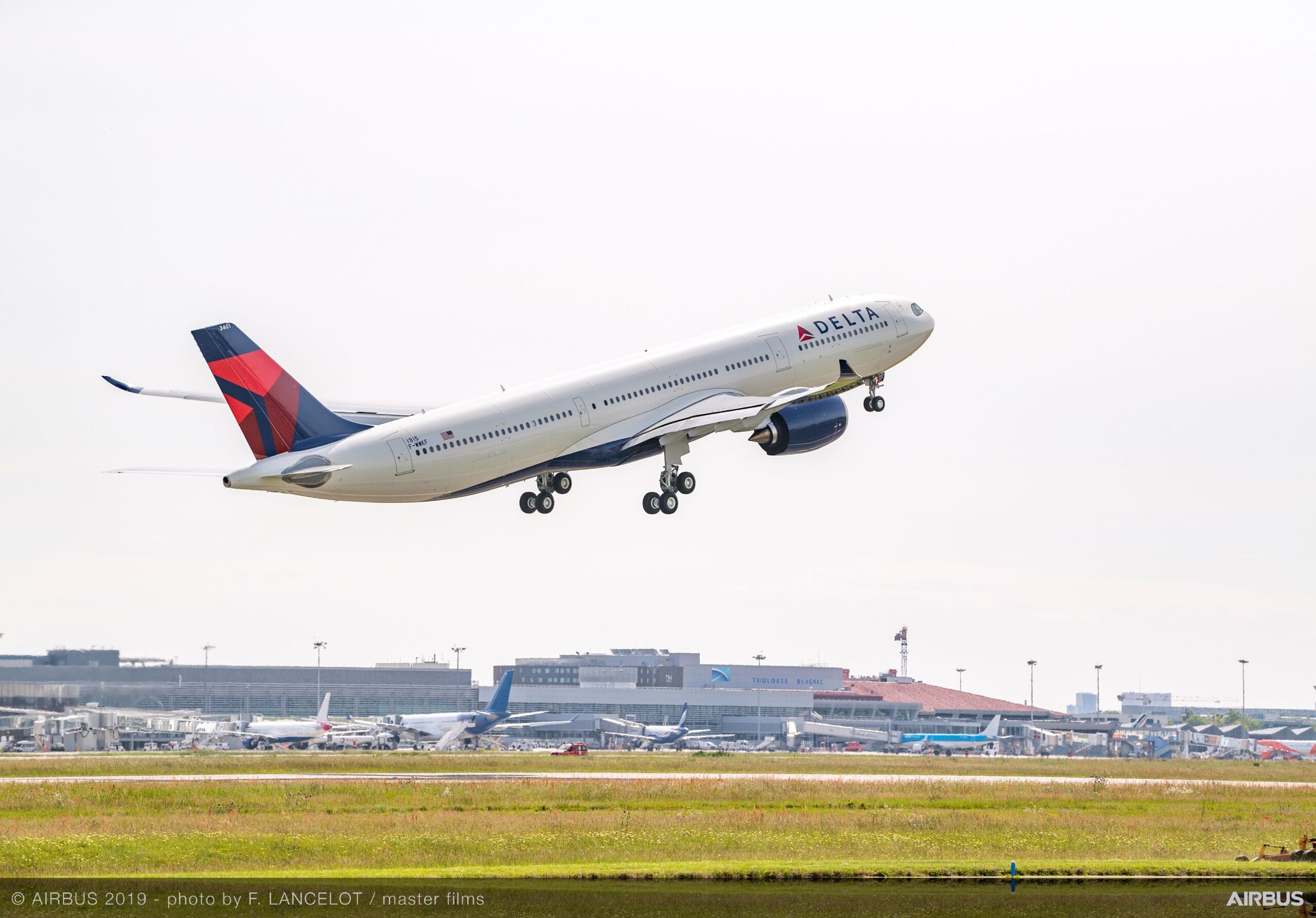
Delta’s Ghana Calculus: Could America’s Giant Enter Ghana’s National Airline Race? By Dominick Andoh
For two decades, Delta Air Lines has quietly built one of the strongest transatlantic aviation relationships between the United States and West Africa through its Accra operations.
Now, as Ghana pushes ahead with plans to establish a new national airline, comments from a senior Delta executive suggest the Atlanta-based carrier may at least be studying the opportunity, a development that could significantly reshape the competitive dynamics of African aviation.
“We are excited to be here. We have a professional and governance affairs team and a licensing team, and we are aware of it. There will certainly be some thought-provoking discussions and evaluations, but we can’t really comment on it. We will see where it goes,” said Rob LeBel, Managing Director – International and Specialty Sales at Delta Air Lines, in response to a question from AviationGhana during a media event in Accra on Thursday, May 21, 2026, on whether the airline could be interested in Ghana’s planned national carrier project.
The carefully worded response may not constitute a formal expression of interest. But in aviation diplomacy, “never say never” often means discussions are happening behind the scenes.
Delta’s Deep Ghana Footprint
Delta’s interest would not emerge in a vacuum. The airline is marking 20 years of uninterrupted service to Accra, a milestone few foreign carriers operating in West Africa can match. Since launching flights to Ghana in 2006, Delta has evolved from a niche transatlantic operator into a dominant force on the U.S.- Ghana corridor.
Its recent seasonal nonstop Accra-Atlanta service proved particularly successful, tapping into surging diaspora demand, student travel, business movement, and growing cultural tourism traffic between Ghana and the United States. AviationGhana previously reported exceptionally strong passenger loads on the route, particularly during the December “Detty December” travel peak and summer traffic season.
The Atlanta route also strategically complements Delta’s broader African network, linking Accra to one of the world’s largest airline hubs with onward access across North America.
For Ghana, Delta’s long-term presence offers something many competitors cannot easily replicate: operational consistency, premium brand strength, and deep ties with the Ghanaian-American diaspora economy.
A Three-Way Strategic Contest?
If Delta eventually enters Ghana’s national airline process, it would likely face formidable competition from Gulf and African aviation heavyweights already linked to the project.
Emirates and Ethiopian Airlines have both previously shown varying degrees of strategic interest in Ghana’s aviation ambitions.
Ethiopian Airlines already has a proven pan-African airline investment model with stakes or partnerships in Zambia Airways, ASKY Airlines, Malawi Airlines and other African ventures. The Addis Ababa-based carrier possesses perhaps the continent’s strongest aviation technical ecosystem, including maintenance, pilot training, and operational expertise.
Emirates, meanwhile, brings unmatched long-haul global connectivity and enormous financial strength. However, analysts note that Gulf carriers traditionally prefer commercial dominance through network expansion rather than through equity-heavy ownership structures in African airlines. Ghana’s new venture presents a novel opportunity to the Dubai-based airline.
Delta’s potential involvement would introduce a different dynamic entirely — an American strategic airline partnership focused heavily on transatlantic flows, premium traffic and U.S.-Africa connectivity.
Why Ghana Matters
The timing is significant. Africa is becoming increasingly important in global airline strategy. With slower growth in parts of Europe and heightened geopolitical pressures affecting traditional global corridors, airlines are seeking high-growth emerging markets.
Accra increasingly fits that profile. Ghana offers political stability, a fast-growing middle class, strong diaspora links, expanding airport infrastructure, and strategic positioning under the African Continental Free Trade Area (AfCFTA), headquartered in Accra.
For Delta, deeper alignment with Ghana could also help counter the growing influence of Gulf carriers across Africa. Emirates, Qatar Airways, Etihad Airways, and the emerging Riyadh Air are all aggressively expanding their operations in Africa.
At the same time, Ethiopian Airlines continues consolidating its dominance as Africa’s largest carrier.
A partnership with Ghana could therefore become more than a commercial decision. It could evolve into part of a broader geopolitical aviation chessboard involving Africa, the Gulf, and the United States.
The Real Question
The critical issue may ultimately not be whether Delta is interested. It is a question of whether Ghana’s eventual national airline model aligns with Delta’s traditionally cautious international investment strategy.
Unlike Ethiopian Airlines, Delta has historically avoided direct airline ownership plays in emerging markets unless strong strategic synergies exist.
Still, after 20 years in Accra, Delta clearly sees long-term value in Ghana. And in aviation, relationships built over decades often matter more than public statements.
Delta’s Ghana Calculus: Could America’s Giant Enter Ghana’s National Airline Race? Send all inquiries and press releases to AviationGhana.info@gmail.com