
IATA Warns of Profit Squeeze as War, Fuel Costs, and Supply Chain Crisis Batter Airlines | São Paulo, Brazil — The global airline industry is entering one of its most challenging periods since the COVID-19 pandemic, with rising fuel costs, geopolitical conflicts and persistent aircraft supply shortages threatening profitability and future growth, the International Air Transport Association (IATA) has warned.
Delivering his State of the Industry Address at the 82nd IATA Annual General Meeting in Brazil, IATA Director General, Willie Walsh, painted a picture of an industry grappling with multiple external shocks just as it had begun to recover from the pandemic.
“No sooner did we put COVID behind us than we faced aerospace supply chain failures, war in Ukraine, geopolitical tensions and tectonic shifts in trade policies,” Walsh told delegates.
Middle East Conflict Drives Fuel Price Shock
The latest challenge stems from the conflict in the Middle East, which has triggered one of the biggest disruptions to aviation fuel markets in recent history.
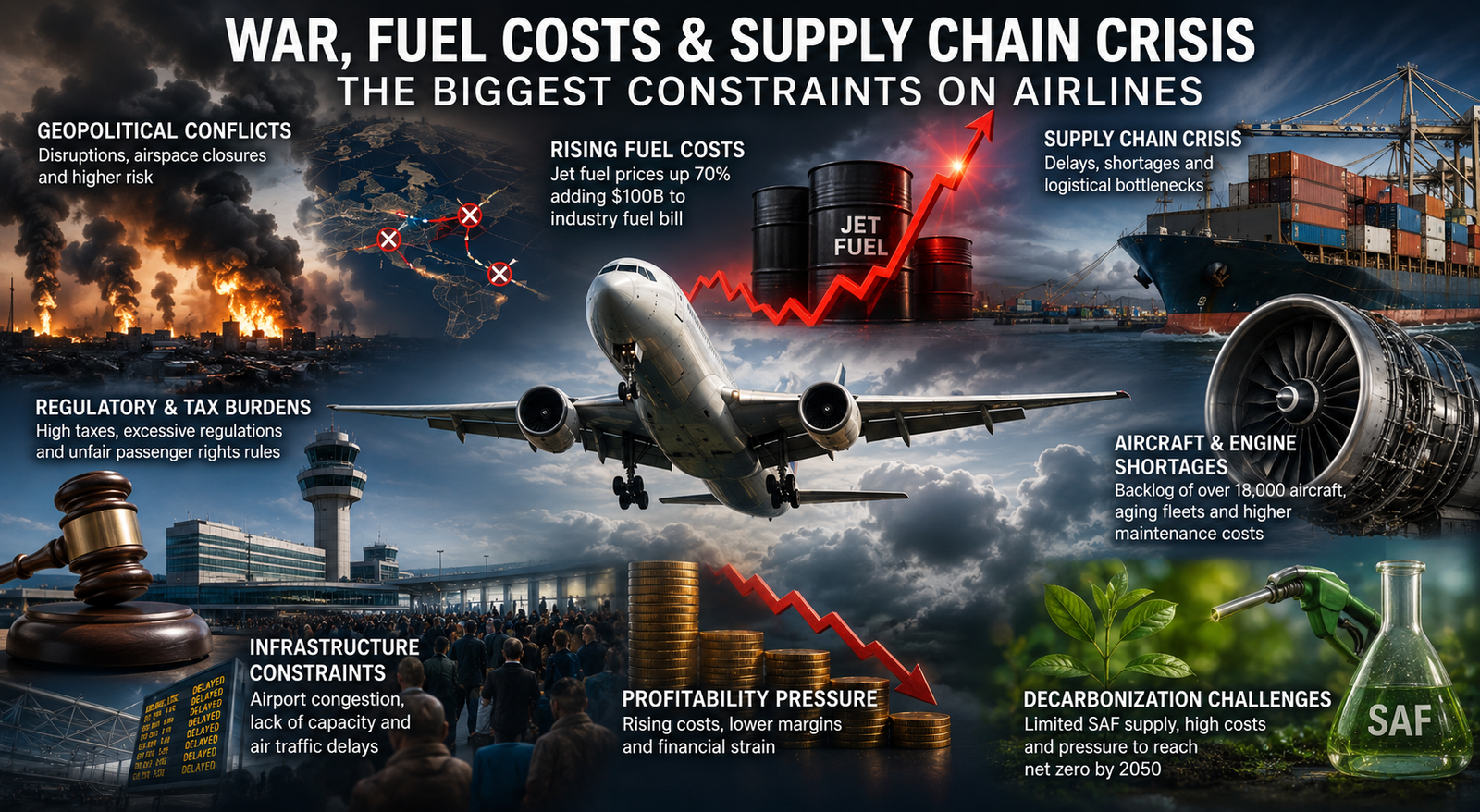
According to IATA, average jet fuel prices are expected to be 70% higher year-on-year, adding an estimated US$100 billion to the global airline industry’s fuel bill in 2026. While passenger demand remains resilient, airlines are increasingly passing the additional costs to travellers through higher fares.
IATA projects passenger traffic growth of 2.1% this year, while cargo demand is expected to expand by only 0.7%, reflecting a more cautious global economic outlook.
Airline Profits Set to Halve
Mounting cost pressures will significantly erode industry earnings.
IATA forecasts that global airline net profits will decline from US$45 billion in 2025 to US$23 billion in 2026, while net profit margins will narrow from 4.2% to just 2%.
Mr. Walsh noted that the ongoing conflict has particularly affected airlines operating in the Gulf region, while carriers that have not fully recovered their balance sheets from the pandemic remain especially vulnerable.
Aircraft Shortages Add to Industry Pressures
Beyond fuel costs, Mr. Walsh launched one of his strongest criticisms yet of aircraft and engine manufacturers, blaming supply chain failures for delaying fleet renewal programmes.
The global aircraft order backlog has now exceeded 18,000 jets, while the average age of the world’s airline fleet has climbed to a record 15.2 years.
IATA estimates that the shortage of more than 5,000 fuel-efficient aircraft is costing airlines billions through higher maintenance expenses, increased leasing costs and missed fuel savings.
Supply chain disruptions alone cost the industry at least US$11 billion last year.
Governments Urged to Support Aviation Growth
Walsh also called on governments to adopt policies that promote aviation growth rather than burdening the sector with excessive taxation and inefficient regulation.
He criticised proposed aviation taxes, outdated passenger rights frameworks and chronic underinvestment in airport and air traffic management infrastructure, arguing that these measures undermine connectivity and economic development.
Net Zero Ambitions Under Pressure
The IATA chief also warned that the aviation industry’s goal of achieving net-zero carbon emissions by 2050 is under increasing strain.
Production of Sustainable Aviation Fuel (SAF) remains well below required levels, covering only 0.8% of global airline fuel demand this year despite growing industry commitments.
Walsh said stronger government incentives and coordinated policy action will be critical if the sector is to meet its long-term environmental objectives.
Despite the mounting challenges, he maintained that aviation remains one of the world’s most important economic enablers, supporting more than five billion passenger journeys annually and facilitating over US$4 trillion in global trade.
“The opportunities this creates include employment for 86.5 million people around the world,” Mr. Walsh said. “Aviation makes the world a better place by bringing people together.”
IATA Warns of Profit Squeeze as War, Fuel Costs, and Supply Chain Crisis Batter Airlines | Aviationghana