
By Prince Offeh
Ghana’s Informal Border Trade Hits GH¢31 Billion in 2025 | Ghana’s informal cross-border trade reached GH¢31 billion between January and September 2025, exceeding the value of the country’s formal trade with Togo, Burkina Faso and Côte d’Ivoire, according to a new report by the Ghana Statistical Service (GSS).
The first-ever extended survey on Informal Cross-Border Trade (ICBT) found that unrecorded trade accounted for about 6% of Ghana’s total trade during the nine-month period. By comparison, formal trade with the three neighbouring countries generated GH¢20.1 billion.
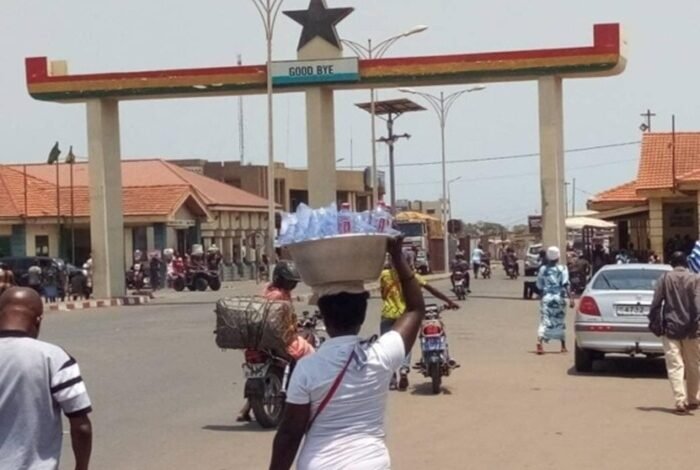
The findings underscore the growing importance of Ghana’s informal border economy, which has long supported jobs, livelihoods and market supplies despite remaining largely outside official economic records.
Government Statistician Professor Alhassan Iddrisu said the survey fills a critical gap in Ghana’s economic data. According to him, measuring informal trade will give policymakers a more accurate picture of the economy and help them develop better trade policies.
Previously, informal cross-border trade remained a major blind spot in national statistics. As a result, authorities struggled to measure the contribution of small-scale traders and the movement of goods across Ghana’s borders.
To address this gap, the GSS surveyed 206 active border points across 10 regions bordering Togo, Burkina Faso and Côte d’Ivoire. The exercise involved 676 field officers, who collected data through direct observation and interviews with traders between January and September 2025.
The report also showed that trade with Togo recorded the highest level of informality. Informal transactions accounted for between 70.5% and 77.8% of total Ghana-Togo trade during the period. Meanwhile, informal trade represented more than three-fifths of Ghana’s trade with Côte d’Ivoire.
Although Ghana recorded trade surpluses in both the formal and informal sectors, the informal trade surplus declined sharply. It dropped from GH¢665.3 million in the second quarter to GH¢49.3 million in the third quarter of 2025.
Furthermore, the GSS said the findings could strengthen border management and support Ghana’s participation in the African Continental Free Trade Area (AfCFTA). The report recommended simplifying registration for small-scale traders, improving infrastructure at border posts and enhancing data sharing among key state institutions.
In addition, the GSS urged greater investment in local production and value chains for commodities such as rice, cooking oil and livestock. It believes regular tracking of informal trade will help integrate the sector into national economic planning and unlock its full contribution to Ghana’s economy.
Ghana’s Informal Border Trade Hits GH¢31 Billion in 2025 | AviationGhana