
By Prince Osei Prempeh Offeh
Ghana’s Boeing Talks Raise Questions Over National Airline Strategy | President John Dramani Mahama’s call for a strategic aviation partnership with Boeing is reviving an old relationship, but it also raises questions about the sequencing of Ghana’s renewed national airline project.
Ghana has been engaging aviation industry players for more than a decade in its search for a sustainable national carrier.
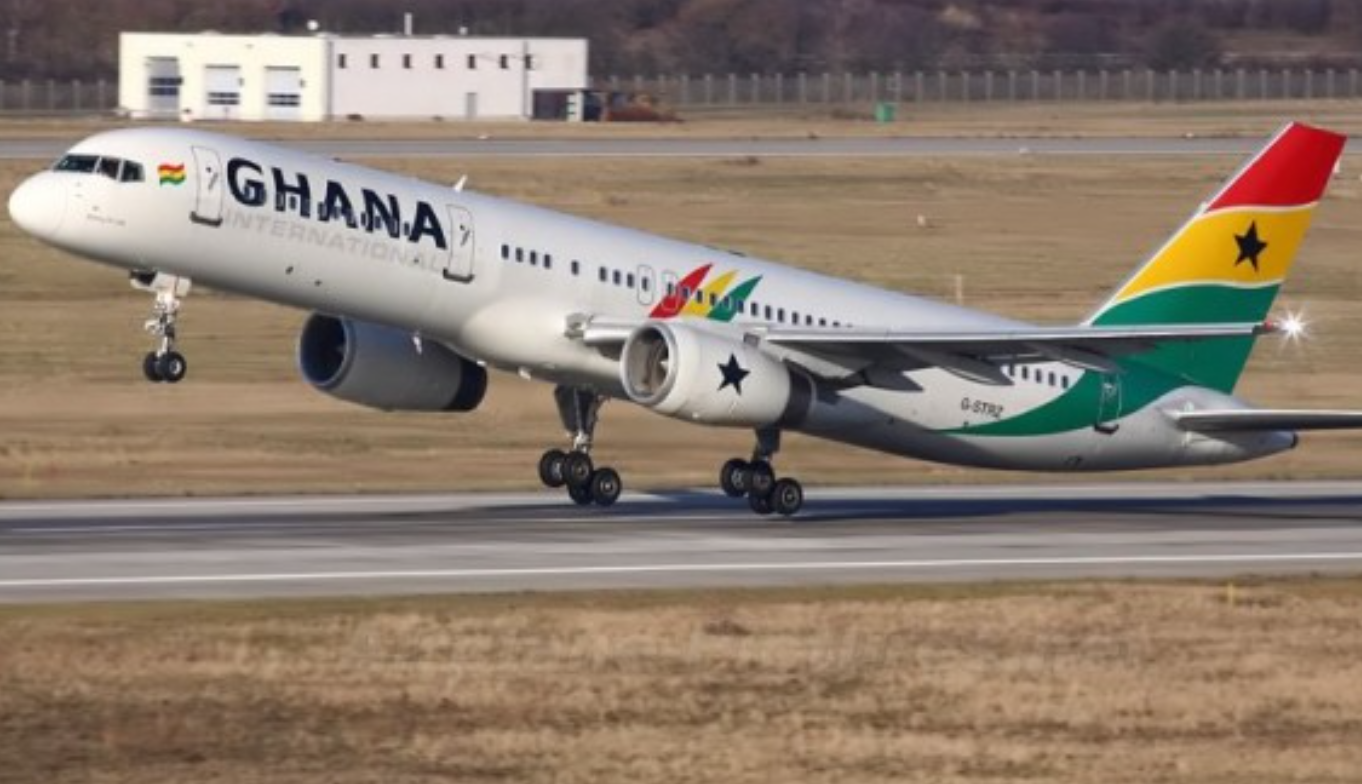
Since 2014, successive governments have engaged with companies including Boeing, Ethiopian Airlines, EgyptAir, South African Airways, Qatar Airways, and Ashanti Airlines. Those efforts produced no lasting national airline, with Ghana remaining without a national carrier after Ghana Airways collapsed in 2004 and Ghana International Airlines ceased operations in 2010.
Against that history, the government’s latest discussions with Boeing are focused on more than aircraft purchases. President Mahama says Ghana wants Boeing to help create jobs, transfer technology, strengthen the industrial base and support the country’s ambition to become an aviation and logistics hub.
“Ghana does not want its relationship with Boeing to be defined simply by the purchase of aircraft. We want a strategic partnership that helps us build an aviation ecosystem—creating skilled jobs, transferring technology, strengthening our industrial base and positioning Ghana as an aviation and logistics hub for West Africa.
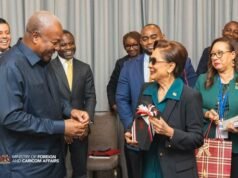
“As we Reset Ghana, we are looking for partners prepared to invest with us, build capacity with us and share in the prosperity we create. Boeing can be one of those strategic partners,” President John Dramani Mahama said during high-level discussions with senior executives of Boeing on the sidelines of the 81st United Nations General Assembly in New York.
But the timing raises a strategic question, since the government has already established a 10-member National Airline Task Force to develop the business model, guide strategic-partner selection and coordinate issues such as fleet acquisition, staffing and route planning.
The subsequent Expression of Interest attracted at least seven submissions, including four airline operators and three advisory entities.
The selection process is intended to identify a partner with technical, financial and operational capability, including the ability to develop the fleet and build a commercially sustainable airline.
That architecture suggests the fleet should logically follow the airline strategy rather than precede it. A strategic operating partner will ultimately need to determine the appropriate aircraft types, fleet size, network, financing structure and deployment schedule based on its own commercial model.
“Pre-committing the government to aircraft or a particular manufacturer before the strategic partner is selected could therefore narrow the options available to the eventual operator.
The core issue is not whether Boeing can contribute to Ghana’s aviation ambitions. It is whether aircraft procurement should be decided before the commercial partner that will operate the airline has been chosen,” Managing Partner of AviationGhana, Dr. Dominick Andoh, said in response to the recent development.
After repeated failed attempts, Ghana’s latest national airline process is explicitly designed around commercial sustainability and an experienced strategic operator.
The sequencing of fleet decisions with that partner could ultimately prove as important as the aircraft themselves.
The search for a strategic partner
Following the publication of the government’s Request for Expression of Interest (REOI). The process sought a strategic partner capable of supporting fleet acquisition, operational readiness, route development, management expertise, and long-term commercial sustainability.
Under the terms of the REOI, bidders were expected to demonstrate the ability to support the airline’s launch by the first quarter of 2027 while outlining fleet deployment plans for the short, medium and long term.
The project has attracted attention because of Ghana’s growing economy, political stability, expanding middle class, and the presence of the African Continental Free Trade Area Secretariat in Accra.
The National Airline Task Force commenced detailed evaluations of the submissions in June 2026. The Charles Asare-led committee is assessing bidders on technical capability, financial strength, airline operating experience, network development potential, governance structures, and their ability to establish a commercially viable national carrier.
Ghana’s Boeing Talks Raise Questions Over National Airline Strategy | Send all inquiries and press releases to AviationGhana.info@gmail.com